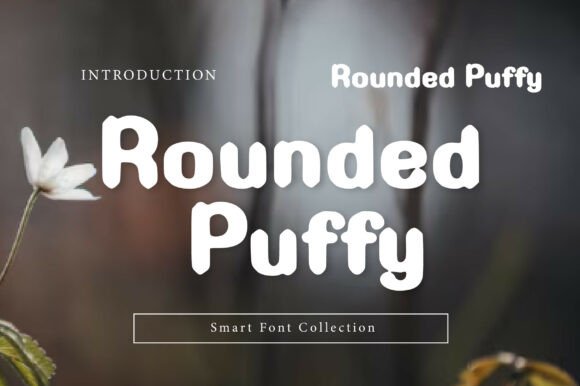
Rounded Puffy Font: The Friendly Display Typeface Every Crafter Needs
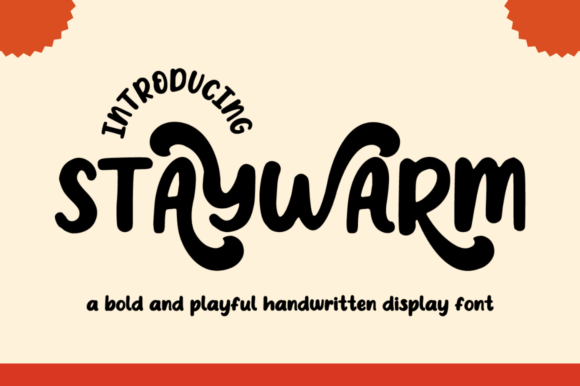
If you’ve ever spent 20 minutes scrolling through font libraries trying to find that *just-right* typeface for your candle label—something soft enough for a lavender-scented soy blend but bold enough to stand out on a crowded Etsy shelf—you already know how much weight the right display font carries. Rounded Puffy isn’t just another cute font—it’s a deliberate, intentional tool built for makers who sell physical goods and digital printables alike. Its extra-rounded letterforms, plush curves, and gentle weight distribution give it a tactile, almost squeezable quality—like hand-poured soap or a freshly baked cookie. That “puffy” feel isn’t decorative fluff; it’s functional warmth.
This is a display font first and foremost—meaning it shines brightest where impact matters most: product names, greeting card headlines, wedding welcome signs, sticker slogans, and SVG cut files for Cricut or Silhouette. Its chunky shapes hold up beautifully at small sizes (think 8–12pt on jar labels), while its smooth edges prevent cutting errors on intricate vinyl decals or iron-on transfers. Unlike some overly stylized fonts, Rounded Puffy avoids thin hairlines or fragile terminals—so it cuts cleanly, prints crisply, and scales reliably across mockups, PDF previews, and printed stationery.
I use Rounded Puffy for three things consistently: boutique packaging, seasonal digital printables, and handmade signage. On my lavender honey jars, “Small Batch • Hand-Poured” in Rounded Puffy reads like a friendly whisper—not corporate, not childish, but authentically handmade. For printable baby shower invitations, pairing it with a delicate script font (like a flowing handwritten style) creates instant visual hierarchy: the name and date pop in Rounded Puffy, while details flow elegantly beneath. And for farmhouse-style wall art? A single phrase like “Gather Here” in bold, centered Rounded Puffy feels grounded, joyful, and quietly confident—no extra embellishment needed.
It works especially well for products where emotional resonance drives purchase decisions: bath bombs, kids’ activity kits, boutique tea blends, and wedding favors. Customers don’t just buy a mug—they buy the feeling of comfort that Rounded Puffy evokes on its surface. That perceived warmth translates directly to brand trust. When your tote bag says “Good Day Sunshine” in Rounded Puffy instead of a generic sans serif, it doesn’t just look prettier—it feels more personal, more intentional, more *yours*.
Readability is where Rounded Puffy surprises people. Yes, it’s playful—but no, it’s not illegible. Letters like “a,” “e,” and “g” are open and uncluttered. There’s generous spacing between characters by default, which helps avoid crowding on narrow stickers or curved surfaces like mugs and tins. I’ve tested it down to 6pt on matte-finish product tags (with laser printing), and it remains fully legible—especially when paired with a high-contrast background. Just avoid using it for full paragraphs or ingredient lists; this is a headline-and-title kind of typeface, not body text.
Font pairing is intuitive here. Try Rounded Puffy with a clean, neutral sans serif (like Montserrat or Inter) for labels and packaging—its friendliness balances their efficiency. For wedding stationery, layer it over a refined serif (think Playfair Display or Cormorant Garamond) for ceremony programs or place cards. Or pair it with a relaxed script font for birthday invites or boutique gift tags—the contrast between Rounded Puffy’s bouncy confidence and the script’s organic flow creates instant visual harmony. No need to overthink it: if it feels balanced in your preview, it’ll land right with your customers.
Rounded Puffy typically includes standard OpenType features—ligatures for smoother “ff” and “fi” connections, stylistic alternates for subtle variation, and multilingual support covering Western European languages. File formats usually include OTF and TTF, both compatible with design software (Canva, Affinity Designer, Adobe Illustrator) and cutting machines. Always double-check your license before uploading to templates or SVG bundles—most commercial licenses cover physical products, digital downloads, and client work, but prohibit resale of the font file itself. If you’re selling editable Canva templates or layered PSD files, confirm that your license permits end-user editing.
What makes Rounded Puffy truly practical for sellers isn’t just how it looks—it’s how it performs across real-world production steps. It renders cleanly in low-res social media graphics (hello, Instagram product carousels), holds detail in PNG exports for Etsy thumbnails, and stays crisp when scaled for large-format prints like 24x36” wall art. I’ve used it for holiday product packaging—“Peppermint Joy” on candy tins, “Cozy & Covered” on knit blanket tags—and every time, customers comment on how “inviting” the typography feels. That’s not coincidence. It’s thoughtful design meeting craft sensibility.
Whether you’re designing printable planner pages with cheerful section headers, laser-cut wooden signs for local markets, or digital download bundles for teachers and parents, Rounded Puffy brings consistency without rigidity. It’s flexible enough to adapt to your brand voice—whimsical, rustic, modern-minimal, or warmly nostalgic—yet distinctive enough to become part of your visual signature. You won’t mistake it for another rounded font: the extra girth in its curves, the evenness of its stroke weight, the absence of sharp corners—it all adds up to something memorable, scalable, and quietly professional.
So next time you’re choosing a typeface for your next batch of product labels or seasonal SVGs, ask yourself: does it reflect the care I put into my work? Does it help customers *feel* what my brand stands for before they even read the words? With Rounded Puffy, the answer is almost always yes.